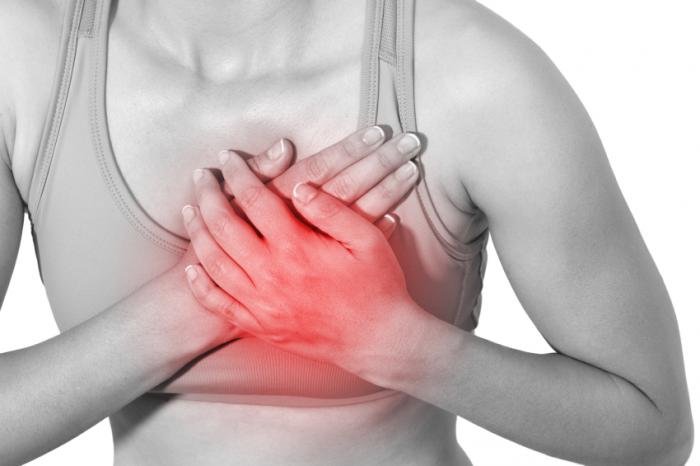
The breast is the upper ventral region of the human torso. The breasts of a female primate’s body contain the mammary glands, which secrete milk used to feed infants. Both men and women develop breasts from the same embryological tissues. However, at puberty, female sex hormones, mainly estrogen, promote breast development which does not occur in men. As a result, women’s breasts become far more prominent than those of men.
What is Mastitis?
Mastitis is the inflammation of breast tissue. It is called puerperal mastitis when it occurs in lactating mothers and non-puerperal otherwise. Mastitis can occur in men, albeit rarely. The signs and symptoms usually appear suddenly and they include: Breast tenderness or warmth to the touch, General malaise or feeling ill, Swelling of the breast, Pain or a burning sensation continuously or while breast-feeding, Skin redness, often in a wedge-shaped pattern, Fever of 101 F (38.3 C) or greater,
The affected breast can then start to appear lumpy and red.
What is a Fibroadenoma?
Benign Breast Tumors usually include simple cysts and fibroadenomas.
What is Breast Cancer?
Breast cancer: A cancerous tumor in the breast is a mass of breast tissue that is growing in an abnormal, uncontrolled way. The tumor may invade surrounding tissue, or shed cells into the bloodstream or lymph system.
There are two main types of breast cancer:
- Ductal carcinoma starts in the tubes (ducts) that move milk from the breast to the nipple. Most breast cancers are of this type.
- Lobular carcinoma starts in the parts of the breast, called lobules, which produce milk.
Another type of breast cancer is inflammatory breast cancer. Inflammatory breast cancer is a rare and very aggressive form of cancer in which cancer cells block lymph vessels in the skin of the breast. This type of breast cancer is called “inflammatory” because the breast often looks swollen and red, or “inflamed.”
Breast Cancer Symptoms
Symptoms of breast cancer may include:
- Breast lump or lump in the armpit that is hard, usually does not hurt
- Change in the size, shape, or feel of the breast or nipple — for example, you may have redness, dimpling, or puckering that looks like the skin of an orange
- Fluid coming from the nipple — may be bloody, clear to yellow, green, and look like pus
Make An Appointment
If you have any questions call us on +918104555000